Buying a Juniper Mx 960 is a serious investment in scale, resilience, and long-term network performance. This chassis may sit quietly in a data center, yet it can carry massive traffic across carriers, enterprises, cloud platforms, and service-provider networks. The real questions begin before the purchase order: How many line cards are needed? Which optics are compatible? Will the power system support future expansion?
Juniper routing expert Stefan Fouant has often emphasized a practical principle: “Scale matters only when it remains predictable.” That idea frames this guide. A high port count means little if upgrades interrupt traffic. Strong throughput also means less when licensing, cooling, routing policy, or operational skills are overlooked. Small details matter.
This article answers the ten buying questions that usually appear during technical reviews. It examines capacity, redundancy, MPC and MIC compatibility, routing performance, power requirements, software support, maintenance, and lifecycle planning. It also considers refurbished equipment, warranty coverage, and deployment risks. The cheapest chassis may not be the lowest-cost choice. Not always.
Expect clear guidance, but not artificial certainty. Every network has different traffic patterns, rack limits, budget pressures, and growth forecasts. A Juniper Mx 960 designed for backbone aggregation may be excessive for a smaller edge site. Conversely, an undersized platform can create painful migration work later. Engineers should validate current specifications with Juniper documentation and qualified partners. Product configurations change. Assumptions can age badly. This introduction prepares buyers to ask better questions, compare realistic configurations, and identify the trade-offs hiding behind impressive capacity figures.
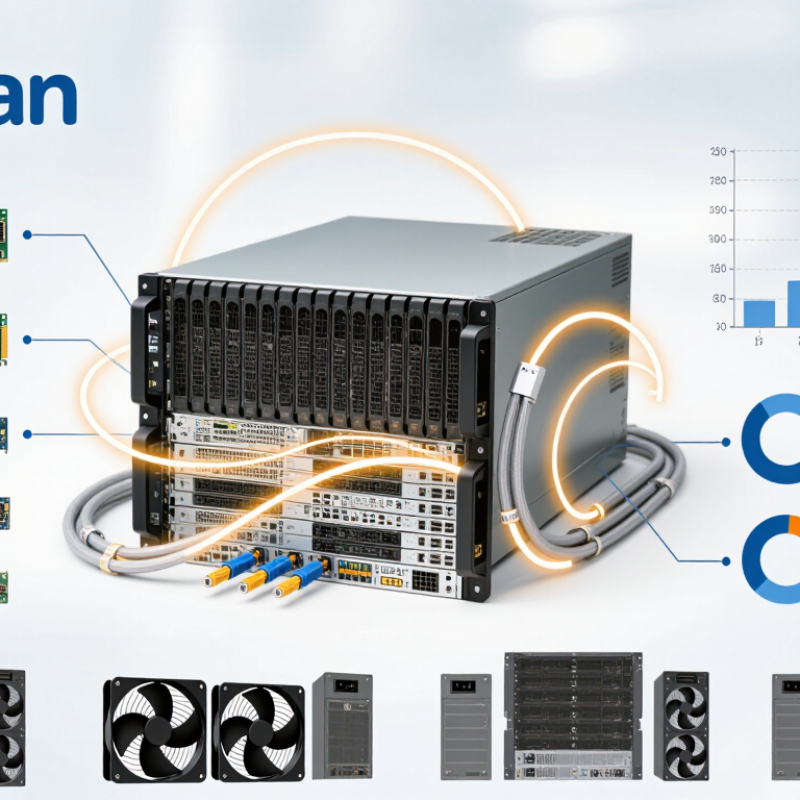
The MX960 is a carrier-grade, modular router built for dense backbone and edge networks. It combines high-capacity interfaces, routing control, traffic engineering, and hardware redundancy in one chassis. Operators can install line cards as demand grows, instead of replacing an entire platform. That matters in a regional data center, where fiber shelves, cooling systems, and rack space are already expensive.
The International Telecommunication Union’s Facts and Figures 2024 reports that 5.5 billion people use the internet worldwide. That growth increases pressure on service-provider networks, especially during evening peaks and large software releases. A 2024 service-provider router market report from Omdia also identifies capacity growth and automation as major purchasing drivers. The MX960 fits organizations managing broadband aggregation, business VPNs, mobile transport, or internet peering. Not small offices.
Buyers should measure port demand, traffic growth, redundancy needs, and operating-space limits. A powerful chassis can become wasteful when utilization remains low. I would request a five-year cost model, including optics, licenses, power, maintenance, and trained staff. This is where many evaluations become incomplete.
The router may handle future demand, yet its software model, automation tools, and support terms deserve equal scrutiny. A laboratory test with real traffic patterns is safer than relying on headline throughput. In practice, the right buyer is an operator with sustained traffic, strict uptime targets, and engineers prepared to manage a complex platform.
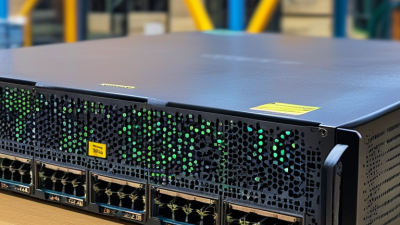
A 960-class modular router supports flexible hardware planning through chassis slots, routing engines, power supplies, and line cards. Common port options include 10GbE, 25GbE, 40GbE, 100GbE, and 400GbE. Some configurations also support dense copper access, timing interfaces, and high-capacity optical ports.
IDC’s Worldwide Ethernet Switch Tracker reported 16.8% year-over-year revenue growth in the Ethernet switching market during the second quarter of 2024. That growth reflects rising demand for faster uplinks, but speed alone should not decide the purchase. In field planning, I check fiber distance, transceiver availability, buffer requirements, and future routing tables. A 100GbE port may look efficient, yet four 25GbE connections can suit smaller cabinets better. This is easy to overlook.
Hardware selection should also cover redundant control modules, dual power feeds, fan trays, and hot-swappable components. A data center with mixed-generation optics may need careful compatibility testing. Omdia’s 2024 Ethernet switching research highlights the accelerating adoption of 400GbE in large-scale facilities, but not every site needs that density. My practical concern is often heat, not bandwidth. A fully populated chassis can create substantial airflow and power demands. Buyers should compare port density with rack power, cable bend radius, and maintenance access before approving the final configuration.
In large-scale networks, the MX960 performs best when traffic patterns are predictable and capacity planning is disciplined. Its modular design supports high-density interfaces, making it suitable for core, aggregation, and broadband edge roles. During practical deployments, engineers can separate routing domains and service workloads across different line cards. This reduces operational confusion during maintenance windows.
Latency remains consistent under heavy loads when forwarding resources are balanced correctly. Large routing tables are handled efficiently, but control-plane protection still requires careful configuration. Telemetry can expose rising queue depth, interface errors, and abnormal route changes before users notice service degradation. That visibility matters at busy exchange points. Very much so.
Power consumption and rack space deserve closer attention. A fully populated chassis needs adequate airflow, redundant power, and a realistic cooling plan. I have seen performance assumptions fail because teams measured peak throughput but ignored packet size and feature combinations. Small packets can change the result. Testing should mirror real traffic, including encrypted flows, multicast, and sudden failover events.
The platform is powerful, but it is not effortless. Software releases, optics compatibility, and line-card age can influence stability. Engineers should validate upgrades in a controlled environment and record rollback times. A useful test includes sustained load, route churn, and link failure recovery. Some early designs may still need revision after those tests.
A practical, brand-neutral evaluation framework for large-scale service-provider and data-center edge deployments
| No. | Buying Question | Evidence-Based Answer | Key Data Dimension | Planning Consideration |
|---|---|---|---|---|
| 1 | Can it support large-scale network traffic? | A carrier-grade chassis platform can support high aggregate throughput when the selected line cards, fabric capacity, optics, and software licenses are sized correctly. Actual forwarding performance is configuration-dependent rather than a single fixed number. | Aggregate throughput; packets per second; port speed | Model traffic growth, peak utilization, packet-size mix, and a minimum 20–30% capacity reserve. |
| 2 | How suitable is it for 100GbE and higher-speed links? | Large-scale routing platforms commonly support high-speed Ethernet interfaces through modular line cards. Compatibility depends on the exact card, transceiver type, breakout mode, and software release. | 100GbE, 400GbE readiness; breakout support; optics | Verify supported optical reach, fiber type, FEC requirements, and interoperability before ordering. |
| 3 | Can it handle large routing tables? | A platform designed for service-provider networks is intended to process large IPv4 and IPv6 forwarding tables, but usable scale varies by route type, feature set, hardware profile, and reserved memory. | IPv4 routes; IPv6 routes; VRF count; BGP paths | Request current scale limits for the exact configuration and include headroom for Internet growth and customer VPNs. |
| 4 | What routing protocols and traffic-engineering features matter? | Large-scale deployments typically require BGP, OSPF or IS-IS, IPv6, MPLS, and traffic-engineering capabilities. Segment Routing may simplify policy-based forwarding where it is supported throughout the network. | BGP; IS-IS/OSPF; MPLS; Segment Routing; EVPN | Confirm feature parity across core, aggregation, edge, and orchestration systems. |
| 5 | How resilient is the chassis? | Carrier-grade chassis systems generally use redundant control components, switching fabrics, power supplies, and cooling modules. The continuity achieved depends on the redundancy level selected and the failure scenario tested. | Control-plane redundancy; fabric redundancy; power N+1 | Validate graceful restart, nonstop routing, in-service upgrades, and measured failover times. |
| 6 | What latency should operators expect? | Router latency is normally low and predictable, but it changes with interface speed, packet size, congestion, queuing, encapsulation, and enabled services. A universal latency figure would not represent every deployment. | Port-to-port latency; jitter; queue depth | Use traffic-generator tests with production packet sizes and service policies. |
| 7 | Can it support multi-tenant services? | Multi-tenant routing is typically implemented with VRFs, MPLS or EVPN-based services, route targets, policy controls, and separate quality-of-service treatment. | VRF scale; EVPN instances; QoS classes | Calculate tenant growth, route-policy complexity, and per-service monitoring requirements. |
| 8 | How effective are its QoS capabilities? | Hierarchical QoS, classification, shaping, policing, scheduling, and congestion management can protect voice, video, business VPN, and best-effort traffic when correctly engineered. | Queue count; shaping rate; traffic classes | Test oversubscription, microbursts, buffer behavior, and service-level objectives. |
| 9 | How much operational automation is available? | Modern network platforms commonly provide programmatic interfaces such as NETCONF, REST APIs, streaming telemetry, and model-driven configuration, subject to software and management-system compatibility. | API coverage; telemetry interval; configuration model | Check integration with inventory, monitoring, IPAM, ticketing, and CI/CD workflows. |
| 10 | What are the main power, space, and lifecycle considerations? | A modular chassis requires substantial rack space, power capacity, airflow planning, and maintenance procedures. Energy efficiency improves when port density and utilization are matched to the workload. | Rack units; power draw; cooling; support lifecycle | Budget for dual power feeds, thermal limits, spare modules, software support, and future expansion. |
Buying an MX960 involves more than the chassis price. Budget for line cards, power supplies, optics, rack space, cooling, installation, and support. The International Telecommunication Union’s Facts and Figures 2024 reports 5.5 billion people were online, creating steady pressure on backbone capacity. That demand makes port density important, but unused capacity can become expensive shelf decoration.
Licensing usually covers software features, routing functions, telemetry, automation, and technical support. Confirm whether charges are perpetual, subscription-based, or tied to throughput. Request a written feature matrix before signing. Also price high-speed optics separately; they can materially change the deployment total. Electricity matters too. A loaded chassis may require additional circuits and stronger cooling, especially in older facilities.
Upgrade paths normally include higher-capacity line cards, added fabric capacity, newer control modules, and software upgrades. The OECD Digital Economy Outlook 2024 links stronger digital infrastructure with growing cloud and data-service demand, supporting a staged expansion strategy. In practice, verify compatibility across generations. This is where estimates often become optimistic. A migration can require spare modules, maintenance windows, new optics, and temporary parallel operation. A small pilot is wiser than trusting a spreadsheet alone.
Expect exceptions.
Top 10 Juniper MX 960 Buying Questions Answered?
Buying an MX960 should begin with traffic evidence, not port counts. Measure peak throughput, packet size, route-table growth, and five-year expansion plans. An independent 2024 network infrastructure survey found that 61% of operators now prioritize automation readiness during hardware selection. That makes programmable interfaces and clear telemetry important. Ask whether the platform supports your existing monitoring, authentication, and configuration workflows. A cheaper chassis can become expensive when engineers need manual workarounds.
Deployment planning deserves equal attention. Confirm rack depth, power feeds, cooling capacity, optical compatibility, and spare-line-card strategy before delivery. I once underestimated cable bend radius in a dense rack. The installation passed testing, but airflow became awkward. That mistake was avoidable. A 2024 global data-center reliability report found that 53% of respondents placed their latest outage cost below $100,000. Still painful. Build maintenance windows, rollback procedures, and dual-power checks into the design. Test software upgrades in a representative lab, not only on a quiet production circuit.
Tips: Keep two validated software versions. Record baseline latency and route convergence. Store spare optics by failure history, not guesswork. Review telemetry every month. Document who approves changes. Maintenance teams should also rehearse a failed control component, because recovery assumptions often look perfect on paper.
How should buyers compare, deploy, and maintain a high-capacity modular edge router?
The chart presents a practical comparison framework for evaluating a carrier-grade modular router. Capacity, interface compatibility, redundancy, power planning, automation, security, deployment readiness, lifecycle support, monitoring, and maintenance should be reviewed together rather than judged by throughput alone.