What is an Enterprise Switch and How Does it Work?
In the dynamic world of networking, understanding "Enterprise Switches" is crucial. As businesses grow, they need reliable solutions for data management. These switches help connect multiple devices. They streamline communication within a vast network, ensuring efficiency.
John Smith, a leading expert in networking technology, states, “Enterprise Switches empower organizations to optimize their networks.” This highlights the importance of these devices. However, not every switch is suitable for every enterprise. Companies often face difficulties in choosing the right equipment. Many invest in advanced switches but overlook their actual requirements.
Enterprise Switches can be complex. They offer various features, but without proper understanding, organizations might not fully utilize them. Balancing performance and cost is essential. It's clear that reflection is needed to enhance network effectiveness. Embracing the right technology will ultimately lead to better communication and productivity.
What is an Enterprise Switch?
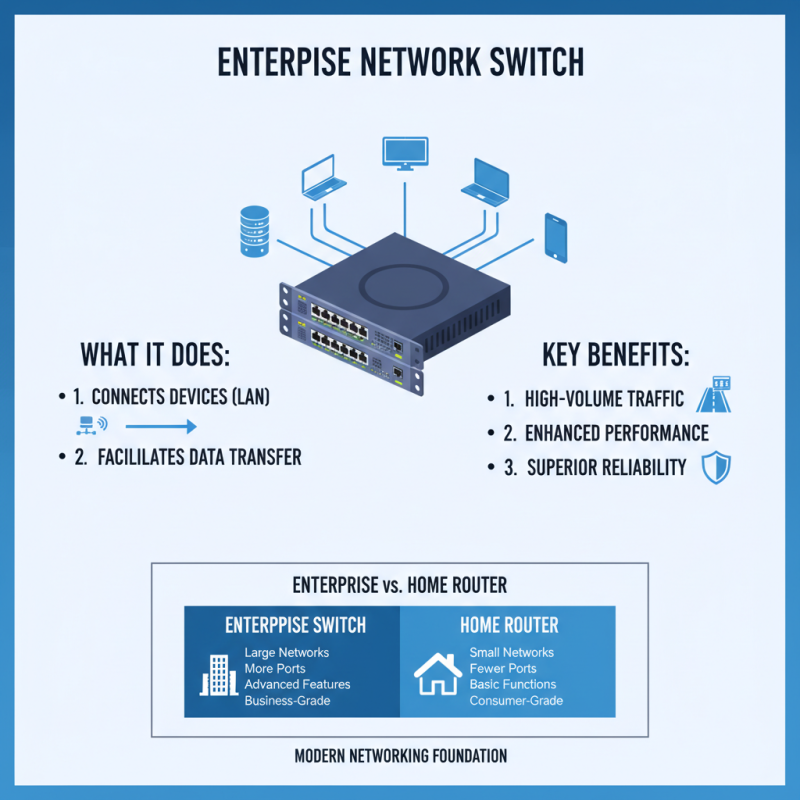
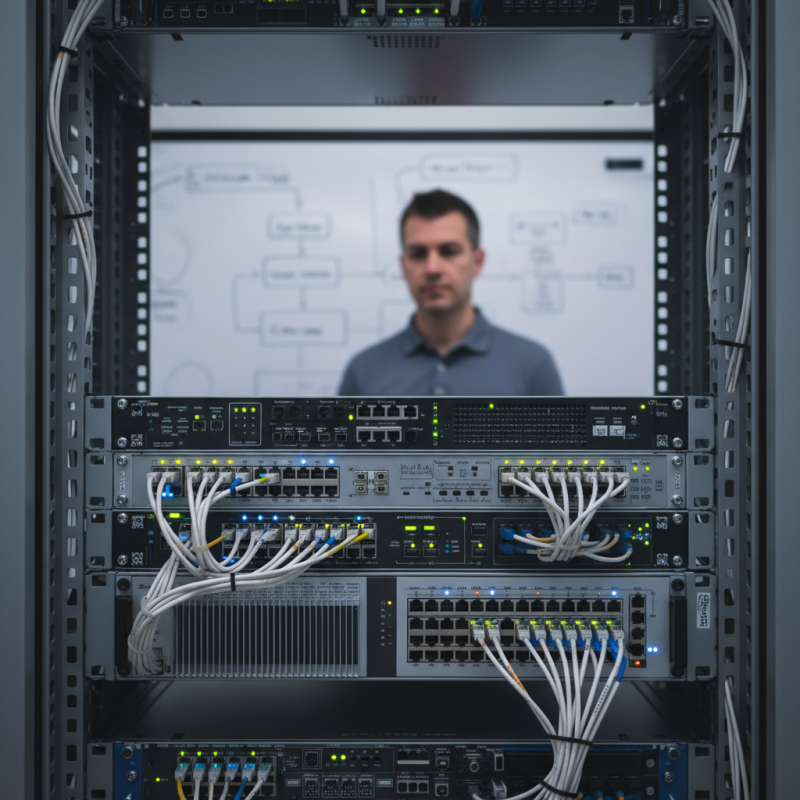
An enterprise switch is a vital component in modern networking. It connects multiple devices within a local area network (LAN), facilitating communication and data transfer. Unlike simple home routers, enterprise switches handle larger volumes of traffic. They provide better performance and reliability.
According to a report from IDC, enterprise spend on networking equipment is projected to grow by 8% annually. This is driven by the rising demand for cloud computing and remote work solutions. A well-functioning switch can enhance productivity by reducing latency. It enables seamless data flow among connected devices. However, many organizations struggle to choose the right switch. They often overlook critical specifications like bandwidth and support for Power over Ethernet (PoE).
Switches vary widely in features. Layer 2 switches operate mainly at the data link layer, while Layer 3 switches can manage network traffic more intelligently. Some switches offer advanced security features, yet not all businesses prioritize these capabilities. Investing in a high-quality switch can yield significant benefits. Yet, firms sometimes settle for lower-cost options, facing challenges down the line. The truth is, a poorly chosen enterprise switch may hinder growth and efficiency. This is a common oversight in many organizations.
Key Features of Enterprise Switches
Enterprise switches are vital for modern businesses. They manage data traffic efficiently within a network. Key features of enterprise switches include scalability, robustness, and management capabilities. A report by Network World noted that 70% of companies seek scalable solutions. This ensures that as organizations grow, their network can expand smoothly without performance issues.
VLAN support is another crucial feature. Virtual Local Area Networks segment traffic for enhanced security and performance. According to a study by IDC, around 80% of IT departments implement VLANs to boost efficiency. This segmentation helps in managing bandwidth effectively while providing control over user access. Moreover, enterprise switches often support Power over Ethernet (PoE). This capability allows devices like IP cameras and phones to draw power from the network cable directly.
However, some challenges exist. Configuring enterprise switches can be complex. Misconfigurations may lead to network vulnerabilities. A study from Gartner found that 25% of security breaches were due to improper network configurations. This underlines the importance of training and proper management of enterprise switches to fully leverage their benefits.
What is an Enterprise Switch and How Does it Work? - Key Features of Enterprise Switches
| Feature |
Description |
Benefits |
| Layer 2/3 Switching |
Supports both Layer 2 and Layer 3 protocols to manage traffic efficiently. |
Enhanced performance and route management capabilities. |
| VLAN Support |
Enables Virtual Local Area Networks to separate traffic for security and performance. |
Improved network efficiency and security through segmentation. |
| Quality of Service (QoS) |
Prioritizes network traffic to ensure optimal performance for critical applications. |
Reduced latency and better user experience for high-priority data streams. |
| Port Density |
Offers a high number of ports to accommodate many devices on the network. |
Cost-effective expansion capabilities for growing networks. |
| Redundancy Features |
Includes features like Spanning Tree Protocol (STP) to prevent loops and ensure redundancy. |
Increased network reliability and uptime. |
| Management Options |
Supports SNMP, CLI, and web-based management for easy monitoring and configuration. |
Streamlined administrative tasks and improved network visibility. |
How Enterprise Switches Function in a Network
Enterprise switches play a crucial role in network architecture, managing data traffic efficiently. They connect multiple devices in a local area network (LAN), allowing for seamless communication. These switches use MAC addresses to forward data to the correct devices. This is different from hubs, which send data to all connected devices. The precision of enterprise switches helps reduce network congestion.
In a network, enterprise switches function by segmenting devices into different collision domains. Each port operates independently. This improves data transmission speed, as packets do not collide. When a device sends data, the switch receives it and checks the destination MAC address. It then sends the data only to the specific device instead of broadcasting it everywhere. This targeted approach enhances overall network performance.
However, managing these switches can be complex. They require proper configuration for optimal performance. Misconfigurations can lead to security vulnerabilities or inefficient traffic flow. Network engineers often face challenges during upgrades or maintenance. Facing these issues can feel overwhelming, but reflection aids improvement. Understanding how these switches function clarifies troubleshooting processes and prevents future mistakes.
Types of Enterprise Switches and Their Uses
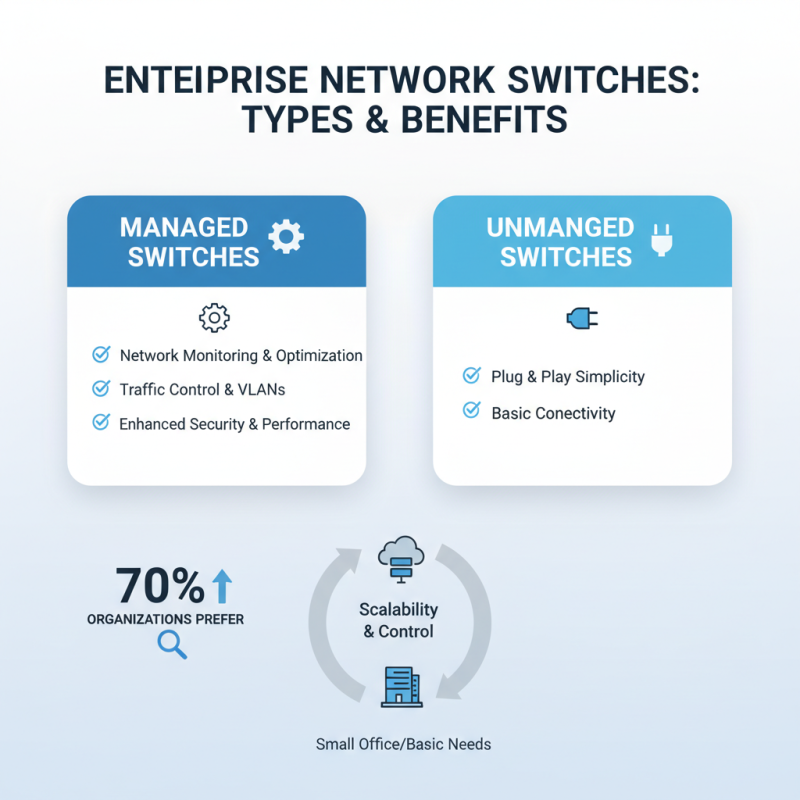
Enterprise switches come in various types, each tailored for specific needs. Managed switches allow for network monitoring and optimization. This type offers control over traffic, enabling VLAN configuration for better security and performance. According to industry reports, 70% of organizations prefer managed switches for their scalability and control.
Unmanaged switches are simpler and cost-effective. They require no configuration and are suitable for small businesses or basic setups. However, they lack advanced features, which can limit growth. In busy networks, unmanaged switches often become bottlenecks. Research indicates that these switches can slow down data transfer rates significantly in high-traffic scenarios.
PoE (Power over Ethernet) switches are another type that is increasingly popular. They supply power to devices through the network cable, reducing the need for additional wiring. This feature is essential for devices like IP cameras and VoIP phones, making setup easier and cleaner. A survey found that over 50% of companies planning to expand their networks are considering PoE technology. Each enterprise switch type has advantages and drawbacks, making careful consideration crucial for optimal network performance.
Benefits of Using an Enterprise Switch in Business Networks
An enterprise switch is crucial for modern business networks. It connects devices efficiently and manages data traffic effectively. According to industry reports, enterprises can boost network performance by up to 50% when using a dedicated switch. This improved performance aids in faster data transmission and enhanced collaboration among teams.
Using enterprise switches also enhances security in business networks. They offer advanced features like VLANs and port security. These features help in isolating sensitive data. A study by a cybersecurity firm found that 60% of businesses faced security breaches due to unmonitored traffic. Implementing enterprise switches can mitigate such risks significantly.
Moreover, scalability is a key attribute of enterprise switches. As businesses grow, their network demands increase. A well-implemented switch allows for easy expansion without major overhauls. However, it requires careful planning to avoid potential configuration errors. Misconfigurations can lead to network downtimes, impacting productivity. Balancing growth and security is essential in leveraging the full benefits of enterprise switches.
Benefits of Using an Enterprise Switch in Business Networks