Why Choose Server GPU Cards for Your Computing Needs?
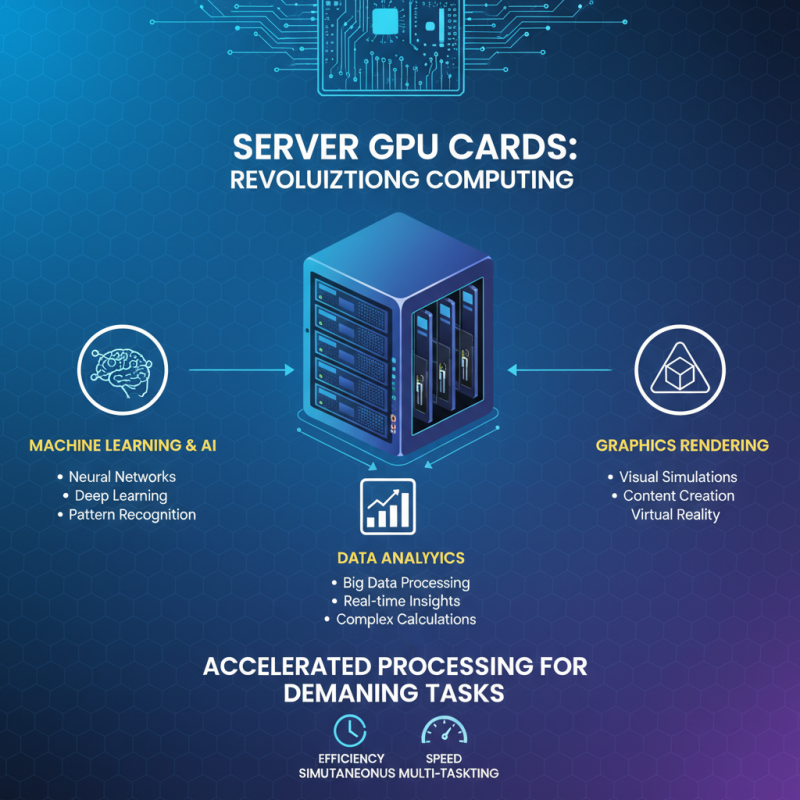
In today's computing landscape, the choice of hardware can make or break performance. One often overlooked option is Server GPU Cards. These specialized components are designed for demanding computational tasks. They bring unparalleled power to data centers, enabling faster processing and enhanced graphics capabilities.
Server GPU Cards excel in parallel processing. This is crucial for applications like AI, machine learning, and data analysis. Their ability to handle vast amounts of data quickly can lead to improved productivity. However, investing in these cards requires careful consideration. Not all setups benefit equally from their use, and integration can pose challenges.
It's essential to assess your specific needs. Are you venturing into high-performance computing? Or are you focused on gaming and visuals? Understanding your goals can help determine if Server GPU Cards are the right choice. Balancing performance and cost is key. While they offer many advantages, potential drawbacks should be acknowledged.
Understanding Server GPU Cards and Their Role in Computing
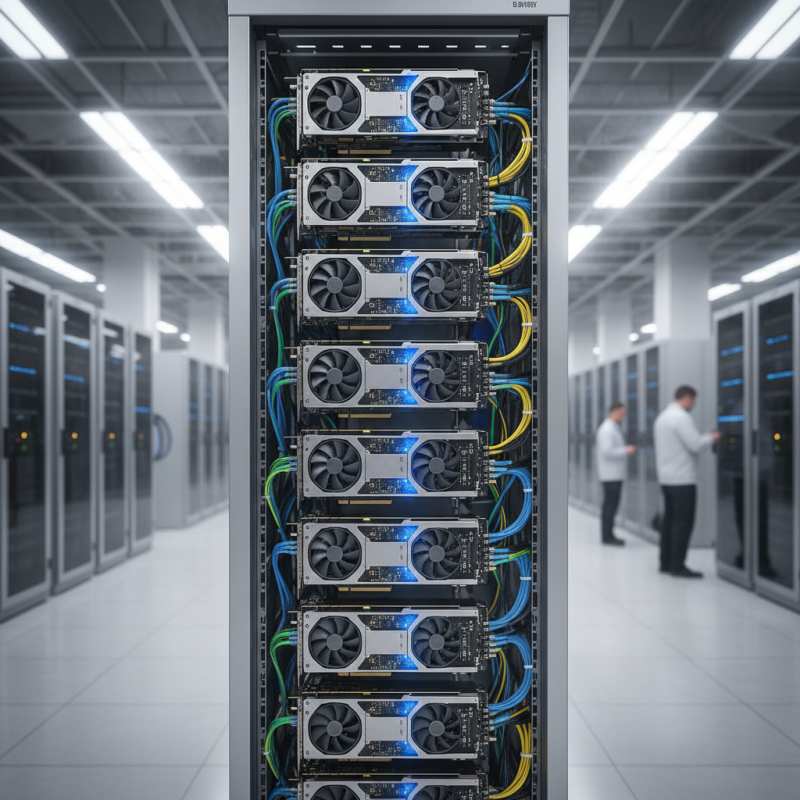
Server GPU cards are instrumental in modern computing, providing immense processing power for various applications. These specialized cards enhance the performance of server systems, especially for tasks like data analysis, machine learning, and graphics rendering. In environments that demand rapid data processing, server GPUs excel. They can manage numerous simultaneous tasks, proving indispensable for businesses relying on efficiency and speed.
One key aspect is their architecture. Server GPU cards are designed to handle more parallel operations than traditional CPUs. This allows them to execute complex computations more effectively. However, the selection of appropriate GPU cards can be challenging. Not all applications benefit equally from server GPUs. Consulting with experts can help identify the right fit for specific needs. Each project may have unique requirements that necessitate careful consideration.
It's also essential to reflect on cost versus performance. Investing in high-end GPU cards may not yield immediate benefits for every organization. Some industries may not fully utilize their potential. Balancing budget constraints with the need for robust performance is crucial. Understanding the specific demands of computing tasks can lead to informed decisions, ensuring a productive use of resources.
The Advantages of Using GPU Cards Over CPU for Various Applications
When considering computational power, GPU cards stand out for specific applications. Unlike CPU, which handles general tasks, GPUs excel in parallel processing. This ability allows them to perform multiple operations simultaneously. For tasks like graphics rendering and data analysis, the speed and efficiency of GPUs can significantly outperform traditional CPU setups.
Several fields benefit from these capabilities. In gaming, GPU cards produce stunning visuals by processing complex graphics quickly. In data science, they accelerate machine learning algorithms, allowing teams to analyze vast datasets efficiently. Even in video editing, the rendering process becomes faster, saving creators time.
However, GPUs may not always be ideal for every task. Simple tasks often don't require the intensive power of GPUs, and using them may result in wasted resources.
Understanding the specific needs of your applications is essential. Evaluating performance against cost can be complex. For industries that rely on speed and efficiency, leveraging the power of GPU cards can be a game changer. Yet, it's crucial to investigate the balance between advanced technology and operational requirements. Choosing the right processing unit can impact productivity and overall success.
Key Factors to Consider When Choosing Server GPU Cards
When choosing server GPU cards, several key factors must be considered. Efficiency is paramount. According to a recent industry report, GPU-powered servers can accelerate tasks by up to 30 times compared to traditional CPU servers. This incredible speed benefits tasks like machine learning and data analysis, making them essential in data centers.
Power consumption plays a critical role as well. High-performance GPU cards tend to consume more energy. Reports indicate that they can use up to 300 watts each. This means organizations must assess not just performance but also the costs associated with powering and cooling these systems. Striking a balance between power and performance is crucial.
Tip: Assess your workload requirements before making a decision. Different applications may benefit from different GPU architectures.
Another factor is compatibility with existing infrastructure. Not all server environments will accommodate high-end GPU cards effectively. Some systems might require special motherboards or power supplies to function correctly. Therefore, understanding your current hardware is necessary.
Tip: Consult with professionals to ensure compatibility and to avoid costly upgrades.
Monitoring industry trends is important, too. As AI and deep learning grow, newer GPU models are regularly released. Staying updated helps identify the best time for an upgrade or purchase.
Popular Server GPU Card Models for Enhanced Performance
In today's computing landscape, server GPU cards have gained prominence for their ability to accelerate processing power. These specialized components excel in applications such as deep learning, data analysis, and complex simulations. According to a report by MarketsandMarkets, the global GPU market is projected to grow from $20.6 billion in 2021 to $83 billion by 2027, largely driven by the demand for high-performance computing.
Popular models such as NVIDIA A100 and AMD MI250X have emerged as frontrunners in this category, offering impressive specifications for enhanced performance. The NVIDIA A100, for instance, provides up to 20 times faster training in AI workloads vs. traditional GPUs. Its architecture allows data centers to maximize throughput, optimizing resource allocation. Meanwhile, the AMD MI250X focuses on energy efficiency, achieving superior performance per watt.
Many professionals overlook optimizing their server configurations for GPU usage. That's where tips come in. Consider evaluating your workload types to select the right GPU model. Also, monitor power consumption closely—high performance should not come at the cost of energy waste. Ultimately, aligning your server with the right GPU can yield significant performance gains, but it requires careful consideration and planning.
Performance Comparison of Popular Server GPU Cards
Future Trends in GPU Technology and Their Impact on Computing Needs
The evolution of GPU technology is reshaping the landscape of computing. In recent years, the demand for powerful computational abilities has surged. This trend is driven by advancements in machine learning, data analysis, and gaming. Reports indicate that the global GPU market is expected to reach over $200 billion by 2026, highlighting its importance in various sectors.
As GPU technology advances, we see a shift towards specialized server GPU cards. These cards excel in handling parallel processing tasks and can significantly enhance computational efficiency. Research shows that organizations leveraging server GPUs can achieve performance increases of up to 80%. However, integration can pose challenges. Companies must invest in infrastructure to fully harness this power.
Looking ahead, the focus on energy efficiency and AI capabilities will further transform GPU usage. Innovations, such as improved cooling systems and reduced power consumption, are essential. Despite this, adaptation requires ongoing evaluation and adjustment. The rapid pace of technological change demands continuous learning to keep up with industry standards and practices.
Why Choose Server GPU Cards for Your Computing Needs?
| Attribute |
Description |
Impact on Computing |
| Performance |
High parallel processing capabilities |
Enhances speed for data-intensive tasks |
| Scalability |
Easily add more GPUs as needed |
Supports growing computational demands |
| Energy Efficiency |
Optimized for lower power consumption |
Reduces operational costs |
| AI Capability |
Designed for machine learning and AI tasks |
Enables advanced analytics and modeling |
| Virtualization |
Supports multiple virtual environments |
Maximizes resource utilization |